How Blurry Brain Maps Keep You in Pain and How to Clear Them
Have you ever felt disoriented, anxious, or disconnected from your body, even when there's no immediate danger?
Or struggled with persistent pain that seems to have no clear source, no matter how many things you've tried?
There's a neuroscience principle that reframes all of it. And once you understand it, healing starts to look very different.
It's called brain maps. And it might be the missing piece nobody has explained to you yet.
Your Brain Has a GPS and It Can Get Blurry
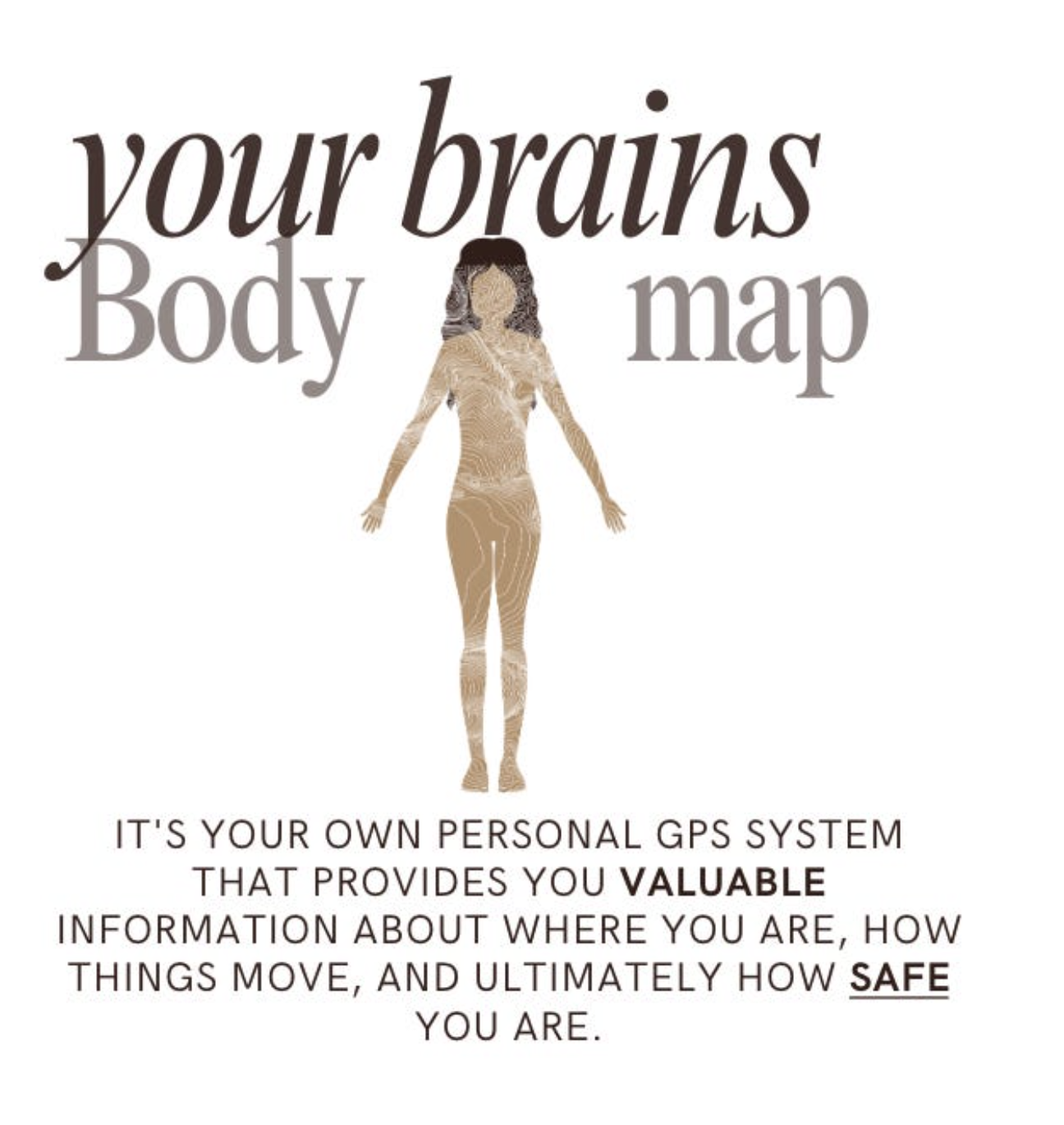
Think of your brain as running a highly detailed GPS system for your entire body. These maps guide your movements, help you sense your environment, and play a central role in whether you feel safe or threatened at any given moment.
Your brain maps everything, not just your arms and legs, but smaller, often-overlooked areas like your eyes and how they move, your jaw and tongue, your fingers, your inner ears.
Each body part has its own address in the brain. When those maps are clear and detailed, your brain can guide movement accurately, assess your environment efficiently, and keep you out of pain.
But when the maps get blurry? That's when things start to break down.
What Blurs Your Brain Maps
Life doesn't always let these maps stay sharp. Physical injuries, repetitive stress, chronic tension, even long periods of emotional stress or trauma can all disrupt your brain's understanding of specific areas of the body.
When that happens, it's like trying to navigate a city with a smudged GPS. Your brain struggles to interpret what's happening, and it responds the way it always does when things feel uncertain.
It ramps up protection. Which often shows up as pain, tension, anxiety, or that persistent feeling that your body isn't quite a safe or comfortable place to be.
The pain isn't imaginary. The brain just doesn't have a clear enough map to feel confident, so it stays in protection mode.
The Good News: Your Brain Can Remap
This is where neuroplasticity changes everything.
Your brain is not fixed. It's adaptable. And with the right inputs, specifically, intentional, varied, full-body movement, it can rebuild those maps and start to feel safe again.
That means moving every body part through its full range of motion. Not just the big joints, but the small ones too: eyes, jaw, fingers, toes. Slow and controlled, so your brain can actually register the detail. Adding sensory input, touch, sound, attention, to deepen the signal.
Each movement is sending your brain updated information. Here's where I am. Here's how I move. Here's what's safe.
And over time, that updated information changes what the brain produces, less pain, less tension, less anxiety, more trust in the body.
This is one of the frameworks at the core of what I teach. And there's a specific way to apply it that most people have never been shown.
Start Here, Right Now
Take a moment and check in. Is there an area of your body you've been ignoring or disconnecting from?
Start small. Wiggle your toes. Stretch your neck slowly. Track a moving object with your eyes. Open and close your jaw gently.
Each of those movements is a message to your brain: I'm here. I'm paying attention. We're safe.
That's where clearing the map begins.
✨ Your brain isn't broken. It's working from an outdated map. And maps can always be redrawn.
In my free masterclass, Heal Stubborn Pain With Your Brain, I walk you through the neuroscience of brain maps, how they connect to chronic pain and nervous system dysregulation, and give you hands-on tools to start retraining yours in real time.
If pain or disconnection has felt impossible to explain, this is the conversation that finally makes it make sense.
Heal Stubborn Pain With Your Brain Masterclass
If you've done everything right and still feel stuck — this is why.
In Heal Stubborn Pain With Your Brain, I explain exactly what's happening in your brain and body when healing feels impossible — and give you two brain-based tools to start experiencing something different. Not more information to process. An actual shift, in your body, today.
What's inside:
- The real reason smart, self-aware people stay stuck the longest
- Why understanding your pain isn't enough — and what actually moves the needle
- 2 brain-based exercises that help your nervous system feel safe enough to finally let go