When Your Senses Disagree - What Your Brain Does Next

You know that feeling when you're reading in the car and suddenly your stomach turns?
The words blur. Your head feels heavy. You have to close your eyes just to steady yourself.
That's not just motion sickness. That's your brain caught between two conflicting realities, and doing everything it can to resolve them.
Your eyes see a still page. Your inner ears sense motion. And your brain, receiving both signals at once, does what it always does when things don't add up.
It sounds the alarm.
What's Actually Happening in Your Nervous System
Your brain is constantly doing one thing above everything else: deciding whether you're safe.
And it builds that sense of safety from the bottom up, starting with three sensory systems that need to agree with each other:
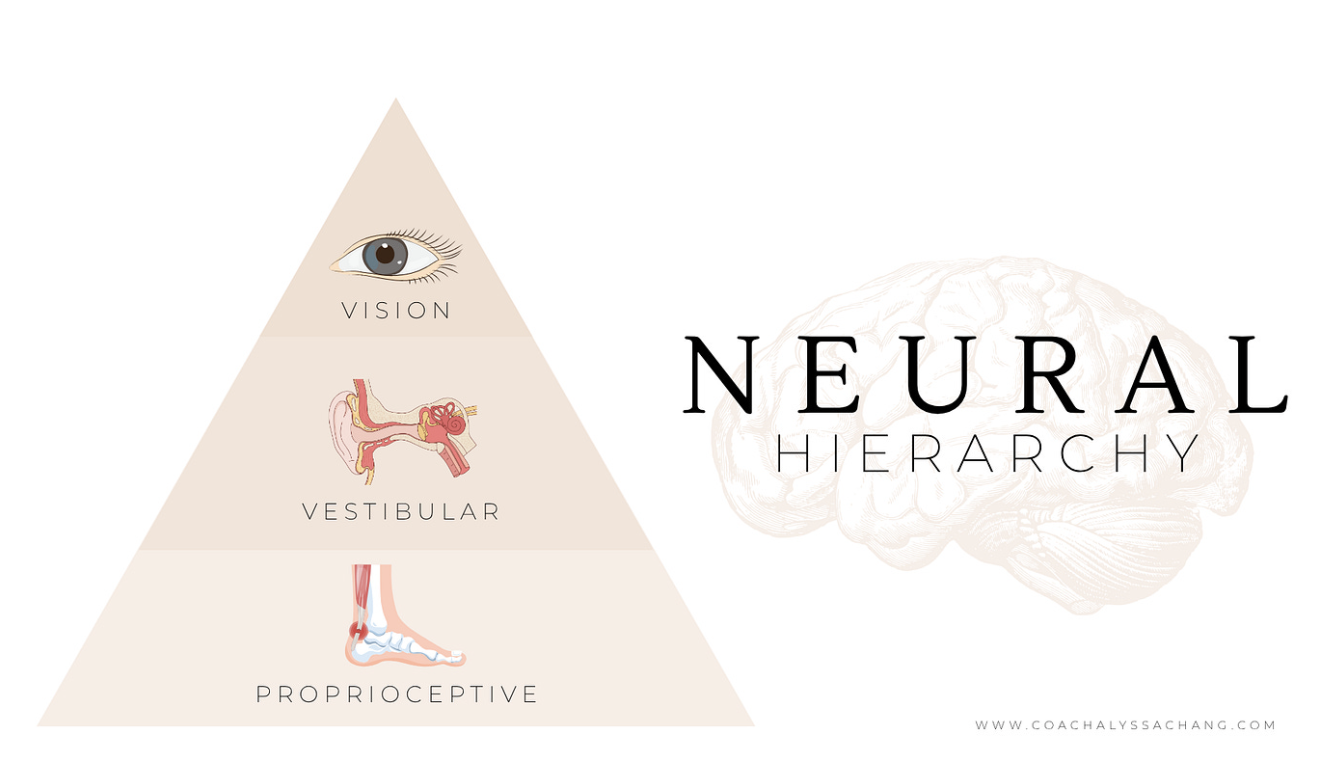
- Your visual system — what your eyes see
- Your vestibular system — your inner ear's sense of balance and motion
- Your proprioceptive system — your body's awareness of where it is in space
When those three systems are in agreement, your brain feels settled. You can focus, rest, create.
But when they send conflicting signals, your brain doesn't just register confusion. It interprets the mismatch as uncertainty. And uncertainty, to the nervous system, often feels like threat.
So it ramps up alertness. Muscles tighten. Breathing shortens. You might feel anxious, dizzy, or tense without knowing why.
You're not overreacting. Your brain is working overtime to make the world make sense again.
Why This Matters Beyond Motion Sickness
Here's what most people don't realize: sensory mismatch doesn't only happen in moving cars.
It happens whenever your nervous system is receiving conflicting information, from your environment, your body, your stress load, your emotional state. And the result is often the same: that vague, unsettled feeling that something is "off," even when you can't explain why.
Chronic tension, fatigue, anxiety, feeling perpetually on edge, these can all be downstream effects of a nervous system that never quite gets its signals to agree.
Which means calming those signals isn't just about motion sickness. It's one of the most direct paths into nervous system regulation that exists.
And most people have never been taught how to use it.
Three Ways to Help Your Brain Re-Align Right Now
These are small, but they work at the level where regulation actually begins — your senses.
- Soften your gaze — look toward the horizon or widen your visual field. Let your eyes take in the bigger picture instead of locking onto one point. This signals to your brain: we're oriented, we're safe.
- Move gently — small, rhythmic movement like walking, stretching, or swaying helps your visual and vestibular systems sync back up.
- Exhale longer than you inhale — slow, extended exhales activate your parasympathetic system, releasing muscle tension and lowering the alarm response.
These tell your brain what words can't: it's okay to settle.
Because regulation doesn't start with your thoughts. It starts with your senses finally agreeing again.
This is one of twelve sensory and brain-based tools I teach, and it's one of the more accessible entry points into what's possible when you start working with your nervous system instead of around it.
✨ Your brain isn't broken. It's just waiting for its signals to agree.
In my free masterclass, Heal Stubborn Pain With Your Brain, I walk you through the neuroscience of how your brain processes safety through the senses, and give you hands-on tools to start creating real regulation in your body, not just understanding it conceptually.
If you've ever felt "off" without knowing why, this is where to start.
Heal Stubborn Pain With Your Brain Masterclass
If you've done everything right and still feel stuck — this is why.
In Heal Stubborn Pain With Your Brain, I explain exactly what's happening in your brain and body when healing feels impossible — and give you two brain-based tools to start experiencing something different. Not more information to process. An actual shift, in your body, today.
What's inside:
- The real reason smart, self-aware people stay stuck the longest
- Why understanding your pain isn't enough — and what actually moves the needle
- 2 brain-based exercises that help your nervous system feel safe enough to finally let go