Why Your Pain Keeps Spreading (And What Your Brain Is Actually Trying to Tell You)

Have you ever noticed how moving one part of your body affects another, like how your jaw softens when your hips relax, or how your eyes feel clearer after shoulder work?
That's not a coincidence. It's your brain reading connection.
Our nervous system doesn't see the body as isolated muscles. It sees relationships, how one side balances the other, how tension in one area helps organize movement in another. And when those relationships go quiet? That's often when pain, tightness, and anxiety show up.
Two of the most powerful ways your brain tracks these relationships are through opposing joint and mirrored movement patterns.
Opposing Joints: Balance Through Tension
Your brain loves balance, and it's built a whole system around it.
Every joint has a partner: the elbow pairs with the opposite knee, the right hip coordinates with the left shoulder. When one side moves, the brain anticipates and stabilizes through its opposite. This is called cross-lateral integration, and it's part of how your brain maintains orientation, posture, and coordination.
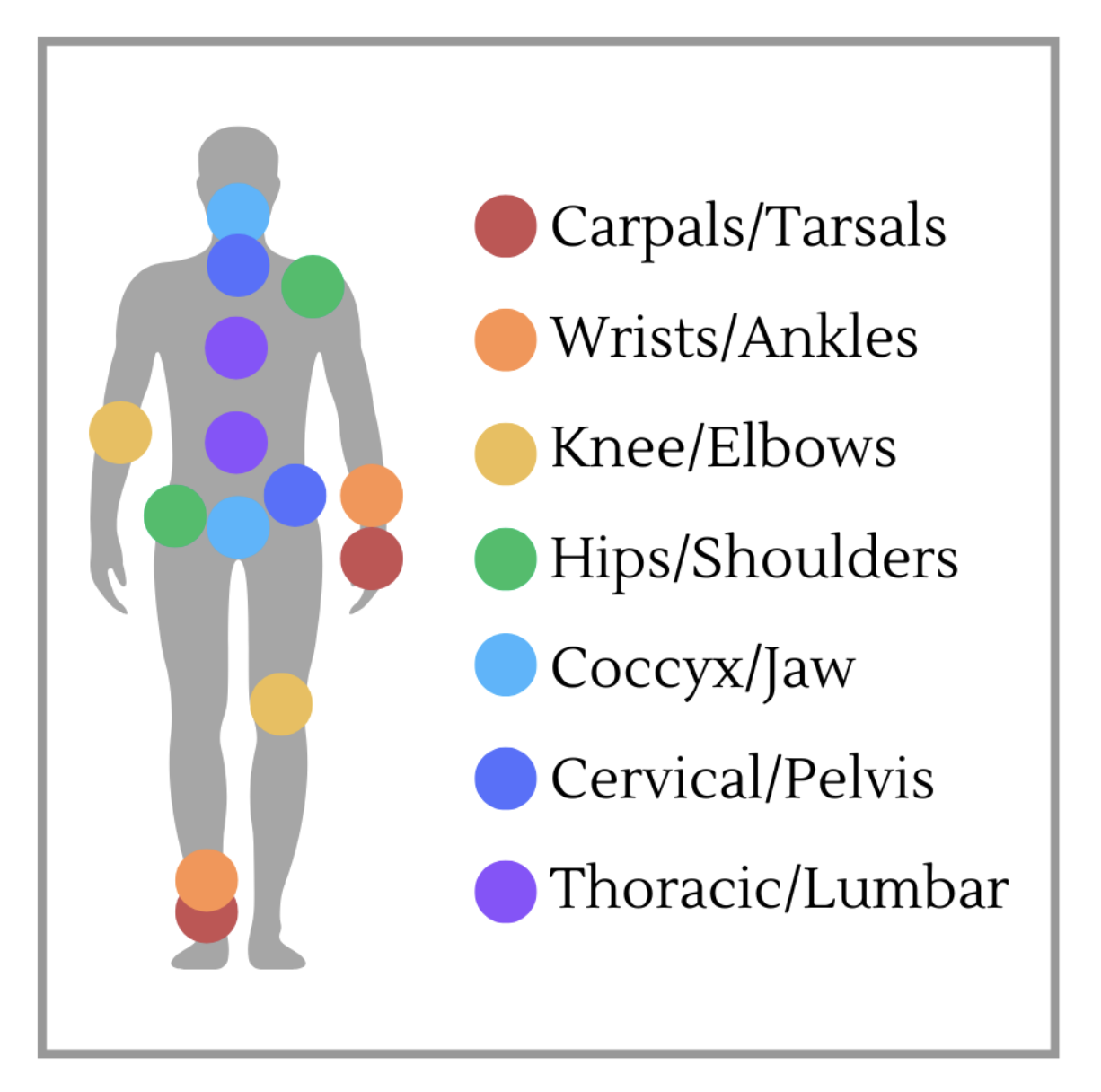
Think of it as a built-in system of checks and balances:
- When you reach forward with your right hand, your left leg subtly anchors to keep you steady.
- When your left hip rotates, your right shoulder often counter-rotates.
These opposing movements help the brain predict and control motion with less effort, a core part of what makes movement feel easy and safe.
Mirrored Theory: Connection Through Reflection
"Mirrored" doesn't mean identical. It means reflected, like how each side of your body offers the brain feedback about the other.
When one side is restricted, the other often overworks to compensate. When one side moves freely, the brain gets updated sensory input that helps both sides recalibrate.
This is why pain so rarely stays in one place. It spreads, shifts, and compensates, because the brain is trying to solve a mapping problem, not just a muscle problem.
That's why gentle cross-body work can feel so grounding. It helps the brain compare data between left and right hemispheres, re-establishing a coherent picture of where you are in space.
Why This Matters for Pain
Movement is how your brain confirms: "You're connected. You can move. You're safe."
When that map gets fuzzy, after injury, chronic stress, or even long periods of sitting, the brain starts sending louder protective signals: tightness, pain, fatigue, anxiety. These aren't signs that something is broken. They're your nervous system saying, "I've lost track of something."
By moving in patterns that reconnect those relationships, right to left, top to bottom, front to back, you give your brain the organized input it's been missing. And an organized brain is a calmer, less painful one.
This is just one of the patterns I teach. There are twelve total, and this is one of the simpler ones.
How to Try It Right Now
- Cross-crawl: March in place, touching your opposite elbow to knee. Go slow, slow enough that your brain can actually feel the pattern, not just perform it.
- Eye-hip connection: Look left as you gently shift your weight into your right hip, then switch. Notice how your gaze and hips start to coordinate.
- Mirror mapping: Use the chart above and move the opposing/mirrored joint of wherever you feel pain (e.g., left ankle pain → try gentle right wrist circles).
These small drills send one clear message to your nervous system: "I'm safe in space."
A Gentle Takeaway
The brain learns connection through contrast, opposing joints, mirrored sides, balanced tension. When you move with awareness of those relationships, you're not just training muscles. You're teaching your nervous system to trust itself again.
That's where real relief begins.
✨ You're not broken. Your brain just needs a new map.
What you just read is one piece of a much bigger picture. In my free masterclass, I walk you through the neuroscience of pain in plain language, and give you the exact tools I use with clients to start shifting it. No fluff, no overwhelming protocols. Just your brain, finally making sense.
Heal Stubborn Pain With Your Brain Masterclass
If you've done everything right and still feel stuck — this is why.
In Heal Stubborn Pain With Your Brain, I explain exactly what's happening in your brain and body when healing feels impossible — and give you two brain-based tools to start experiencing something different. Not more information to process. An actual shift, in your body, today.
What's inside:
- The real reason smart, self-aware people stay stuck the longest
- Why understanding your pain isn't enough — and what actually moves the needle
- 2 brain-based exercises that help your nervous system feel safe enough to finally let go